
UN Women’s CSW70 with UK for UNHCR Storyteller Kana Josée
UK for UNHCR Storyteller Kana Josée reflects on CSW70 – and what achieving real justice for displaced women and girls demands of all of us.
20.04.2026
Kana Josée is a UK for UNHCR Storyteller, entrepreneur, humanitarian, author and women’s rights advocate. Josée recently attended the 70th session of UN Women’s Commission on the Status of Women (CSW70) as a digital participant with UN Women UK. Following CSW70, as well as Women’s History Month, these are Josée’s key takeaways…
——-
This year’s priority theme: Ensuring and strengthening access to justice for all women and girls
Taking part in CSW70 as a digital participant was a meaningful experience that highlighted the realities faced by displaced women and girls. This year’s priority theme was “ensuring and strengthening access to justice.” The discussions made it clear that displacement is not only about losing a home, but also about losing safety, stability and access to basic rights.

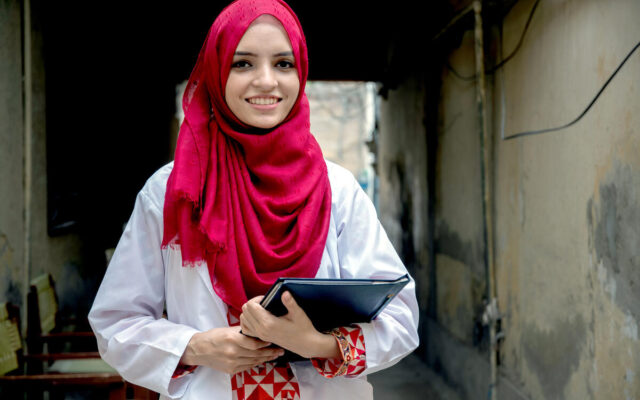
UK for UNHCR Storyteller Kana Josée (R) reflects on CSW70 – and what achieving real justice for displaced women and girls demands of all of us.
- Displaced women and girls face threats inside and outside the home
In situations of conflict and war, women and girls are often the most affected. Many are forced into unsafe conditions where justice is difficult to access. A key issue raised was domestic violence among displaced women. Some women are not only dealing with the loss of their homes, but are also facing abuse within their households, without proper protection or support. There is an urgent need to ensure survivors’ rights to safety and to strengthen justice systems.
2. Access to justice requires stronger financial commitments
Another important point discussed was the lack of dedicated funding for displaced women and girls. Without adequate resources, it is difficult to provide essential services such as protection, healthcare and legal support. If we are serious about rights and justice, then there must be stronger financial commitment to enable these efforts.
3. Education and training are pathways to independence
The meetings also highlighted the importance of education and skills for women and girls fleeing conflict. Access to learning and training helps women and girls to become more independent and ultimately better able to rebuild their lives. This is not just support – it is a basic right that should be protected.
4. Returning home after displacement
In addition, attention was given to women who are returning to their countries after being displaced. When refugees return home, women face unique challenges. Humanitarian support can empower women to reintegrate, find opportunities and live with dignity in their communities.
Overall, my reflection from CSW70 is that achieving rights, justice and action requires practical and continued effort. Displaced women and girls must be protected at all stages, and their needs must be prioritised. There must be real action through stronger protection systems, better funding and more opportunities for women to thrive.
My biggest takeaway is that justice not only exists in law, but it must also be accessible for all women and girls – especially those in conflict areas, those facing persecution and those seeking asylum.
Most importantly, our voices should be heard and included in all decisions that affect our lives.
——-
To learn more about Josée, please visit this page.