
Central African Republic crisis
Ambassana, a mother of four, fled conflict in the Central African Republic in 2013 to settle in Chad.
Last updated 27th August 2025
Clashes between armed groups have driven over 670,000 people like Ambassana from the country. Please help these families find safety and survive.

Shelter

Essential supplies

Livelihoods assistance
What’s happening in the Central African Republic?
The socio-economic and political situation in the Central African Republic (CAR) is the cause of a long-term humanitarian crisis marked by forced displacement, an extremely fragile economy and limited basic services.
Despite some progress, the situation in CAR remains complex, unpredictable and volatile. At the same time, it is affected by crises in neighbouring countries, which result in more refugees arriving in CAR and impact the socio-economic developments in the country.
While the country has made progress towards peace, democratic governance and an improved humanitarian situation over the past five years – particularly in the south-west and major cities – it still faces challenges in security, protection and providing basic services to the most vulnerable and forcibly displaced people.
Currently, 446,000 people are internally displaced, while 671,000 people have found refuge in neighbouring countries.
How has the situation in CAR changed over the last few years?
The presence of local authorities has increased throughout the country after the signing of the Political Agreement for Peace and Reconciliation between the government and 14 armed groups in 2019. However, most of the armed groups once again took up arms against state forces, leading to a continued state of alert and localised conflict.
The situation further deteriorated with the 2020 presidential election, as most of the armed groups joined together under an alliance and marched on the capital to carry out a coup d’etat. Despite the failed attempt, periodic clashes continue between armed groups and state forces. While armed groups have been weakened, they continue to be active.
What is the forced displacement situation in CAR?
Over 445,000 people are internally displaced, with over 671,000 refugees and asylum seekers in neighbouring countries, such as Cameroon, Chad and the Democratic Republic of Congo.
Following the war that broke out in Sudan in April 2023, CAR is hosting more than 38,000 Sudanese refugees.
Where are families fleeing to?
Families are crossing the border into neighbouring countries, like the Democratic Republic of Congo and Cameroon, where there are now over 280,000 refugees from CAR.
What’s the situation in the villages they’ve left behind?
Many villages in CAR lie deserted, with houses burnt, cattle stolen and fields of coffee, manioc and peanuts looted and vandalised by armed groups.
How do families support themselves far from home?
In the DRC – where most refugees stay, near the rivers in the borderlands – men support themselves by fishing, while women work as land labourers for around 23 pence a day.
Where can I access the latest data and reports?
CAR Operations – for latest on UNHCR’s relief work to protect displaced people inside the Central African Republic.
Did you know many refugees from CAR escape in canoes, or walk for weeks with little food or water to sustain them?
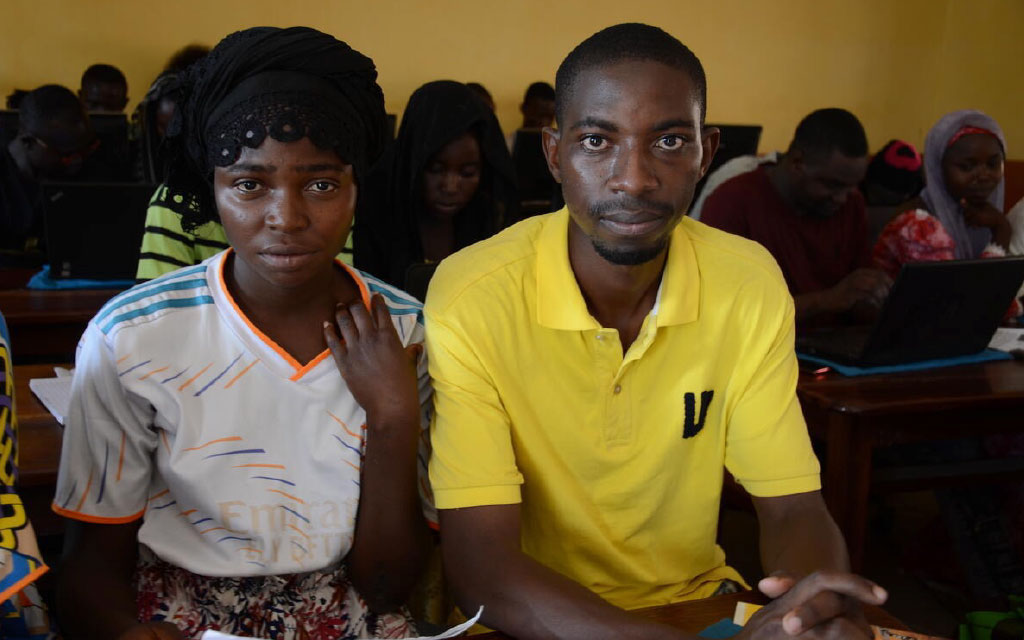
Ibrahim is back in his hometown after a long period of refuge.
He has started a six-month computer training course in Bouar in the Mambere Kadei as part of his reintegration.
Between 2013 and 2015, the conflict in the Central African Republic forced over 660,000 people to seek refuge in neighbouring countries, including Cameroon. Since 2017, UNHCR has been supporting Central African refugees in exercising their right to return, following the signing of a tripartite agreement between the governments of Cameroon, the Central African Republic and UNHCR.
Photo: © UNHCR/Stella Fatime